


Collagen AGEs Assay Kit, CMA-Specific, Glyoxal
Cosmo Bio
- Catalog No.:
- CSR-AAS-AGE-K03


- Shipping:
- Calculated at Checkout
$719.00
Related Products


Product Description
Although carbohydrates are indispensable for ATP production, excess amounts of carbohydrates modify amino residues of amino acids such as lysine and arginine, and results in the irreversible functional disorders of proteins by changing the three-dimensional structure and net negative charge in patients with disordered metabolism. Since this reaction was first reported by Louis Camille Maillard in 1912, the reaction is called the Maillard reaction, or glycation. The Maillard reaction is divided by early and advanced stages. Early stage generates Amadori rearrangement products, such as haemoglobin A1c, whereas advanced stage generates the AGEs (advanced glycation end products), which is characterized by colour in brown andprotein cross-linking. Collagen, the structural protein that forms skin, blood vessel wall and bone, also undergo glycation reaction.
Carboxymethylarginine (CMA; Nω-carboxymethylarginine) is a type of advanced glycation end product (AGE) formed through the reaction of glyoxal with arginine. CMA is characterized as a non-fluorescent, non-crosslinking AGE and has been reported to be generated preferentially in collagen. Accumulation of AGEs in collagen can adversely affect fibroblast function through collagen modification and degeneration, and is considered to contribute to aging processes not only in blood vessels but also in the skin.
Features
- Specific detection of CMA (Nε-carboxymethyllysine) by ELISA
- Ideal for screening AGE formation inhibitors
- Useful for the development of functional foods and cosmetic materials with anti-glycation activity
Product Data
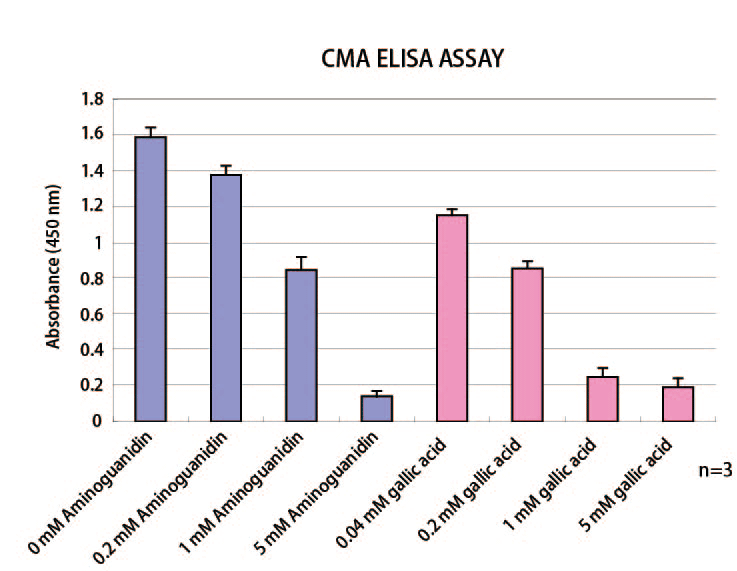
Fig 1. Screening for anti-glycation compounds using CMA generated from collagen glycated with glyoxal for 7 days. Concentrations indicate the final concentration in the well.
AGEs Research & Anti-Glycation Kit Selection Guide
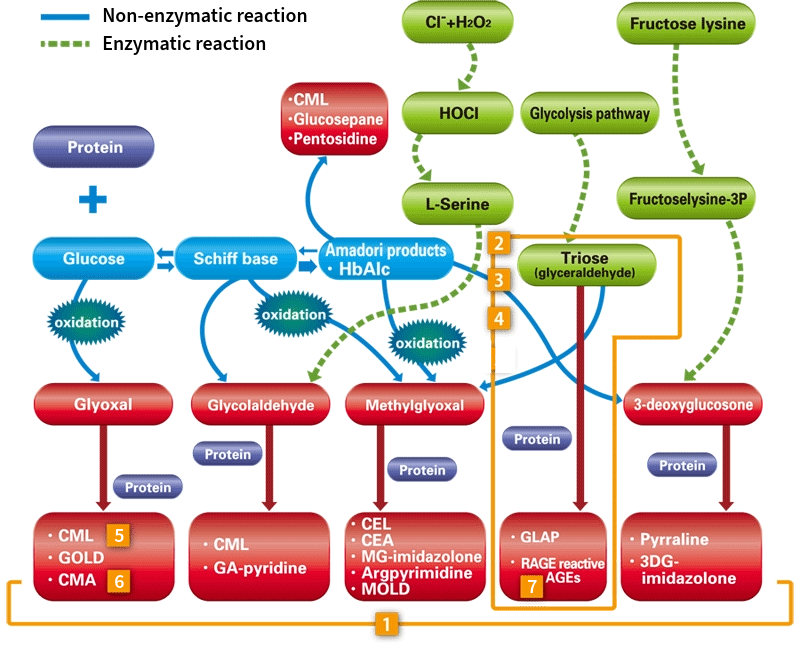
Fig 2. AGEs formation pathway
| Figure | Target | Recommended Kit (Product name / Cat.No.) |
| 1 | Glucose/Fructose-Induced AGE Formation* | Collagen Glycation Assay Kit, Glucose/Fructose (PMC-AK70) |
| 2-4 | Glyceraldehyde-Induced AGE Formation* | Collagen Glycation Assay Kit, Glyceraldehyde (PMC-AK71) Albumin Glycation Assay Kit, Glyceraldehyde (CSR-AAS-AGE-K01) Elastin Glycation Assay Kit, Glyceraldehyde (CSR-AAS-AGE-K05) |
| 5 | CML (Nε-Carboxymethyllysine) | Collagen AGEs Assay Kit, CML-Specific, Glyoxal (CSR-AAS-AGE-K02) |
| 6 | CMA (Nω-Carboxymethylarginine) | Collagen AGEs Assay Kit, CMA-Specific, Glyoxal (CSR-AAS-AGE-K03) |
| 7 | RAGE-reactive AGEs | RAGE Reactive AGEs Assay Kit, Glyceraldehyde (CSR-AAS-AGE-K04) |
* Select the assay according to the target protein or glycation model:
• PMC-AK70: Collagen (glucose/fructose-induced glycation)
• PMC-AK71: Collagen (glyceraldehyde-induced glycation)
• CSR-AAS-AGE-K01: Albumin
• CSR-AAS-AGE-K05: Elastin
| Documents & Links for Collagen AGEs Assay Kit, CMA-Specific, Glyoxal | |
| Datasheet | Collagen AGEs Assay Kit, CMA-Specific, Glyoxal Datasheet |
| Flyer | Collagen AGEs Assay Kit, CMA-Specific, Glyoxal Datasheet |
| Documents & Links for Collagen AGEs Assay Kit, CMA-Specific, Glyoxal | |
| Datasheet | Collagen AGEs Assay Kit, CMA-Specific, Glyoxal Datasheet |
| Flyer | Collagen AGEs Assay Kit, CMA-Specific, Glyoxal Datasheet |