

Key Takeaways
● Cell purity affects every downstream result, from flow cytometry to CAR-T development, which makes the isolation method itself a factor in reproducibility.
● Magnetic bead-based separation is a validated, three-decade standard, but the physical stress it introduces can subtly alter the phenotype of manipulation-sensitive cells like T cells, monocytes, and macrophages.
● Magnet-free, bead-free technologies for isolation and activation offer a way to preserve native phenotype and functionality without added cleanup steps.
● Bead-free methods can complement established protocols, particularly for applications where high cell purity and phenotypic consistency are essential.
Introduction
Isolating a cell population is rarely the finish line in a research project. It's the starting point for everything that follows: functional assays, expansion protocols, and therapeutic development, along with the data that eventually ends up in a manuscript or grant renewal. Yet one question gets asked less often than it should: does the isolation process itself change the cells being studied? For anyone working with T cells, monocytes, or other manipulation-sensitive populations, purity and phenotype preservation are both critical for research integrity, and the method used to isolate cells can influence both.
Why Cell Purity Is Non-Negotiable in Modern Research
Cell purity is essential: downstream data is only as reliable as the starting population. Flow cytometry, functional assays, transcriptomic profiling, and CAR-T development each depend on a defensible, well-characterized input. Contaminating cell types or activation artifacts introduced during isolation can subtly skew results in ways that are difficult to trace back to their source, and reproducibility issues that surface months later often start here. The stakes extend well beyond the bench: publication integrity, grant renewal, and clinical translation all rest on reliable cell preparation workflows.
The Overlooked Variable: How Isolation Can Change Your Cells
Magnetic bead-based separation has been the field standard for roughly three decades—and for good reason. It works and it's well characterized, with generations of published protocols built around it. Mechanistically, though, beads and magnetic fields introduce physical stress and prolonged handling time. Manipulation-sensitive populations such as T cells, monocytes, and macrophages can respond to that stress with subtle phenotypic or functional shifts that aren't always visible until much further downstream. These effects are not specific to any single vendor or kit, but rather reflect a known characteristic of the technology itself, one worth factoring into experimental design.
A Natural Evolution: Bead-Free Separation and Activation
A newer category of magnet-free, bead-free cell isolation and activation technologies is emerging to address exactly this problem. The principle is straightforward: removing magnetic components and residual particles from the isolation process reduces the mechanical and immunological stress placed on cells, helping preserve native phenotype and functionality. Magnet-free cell isolation technology applies this thinking to T-cell separation, using negative selection to remove non-target cells without magnetic beads, centrifugation, or residual particles in the final product. The same logic extends downstream to activation: bead-free T-cell activation technology relies on non-magnetic, non-phagocytisable particles bound with stimulating antibodies, so cells can be activated and expanded without introducing beads that later need to be removed. It's a similar shift to upgrading a microscope's optics: the goal hasn't changed, but the tool doing the work has been refined.
What This Means for Your Workflow
Adopting a cleaner isolation and activation approach doesn't require abandoning validated protocols. For many labs, bead-free methods are reserved for projects where purity and consistency carry significant weight, such as data heading into a grant renewal, a publication, or a clinical program. Better starting material tends to translate into more confidence in downstream data — and sometimes a stronger case in the next manuscript or funding application.
See the Data: Magnet-Free Cell Isolation
The following data were obtained using magnet-free cell isolation technology (Neptune™ T-Cell Separation System). The Neptune system selectively removed unwanted cell populations from the initial cell suspension, accounting for less than 5% of the final cell suspension (Figure 1A). The CD3+ fraction was eluted at a purity of 93% and an average yield of 63% (Figure 1A,1B). Viability assessment after separation confirmed that isolated cells maintained a high viability (>85%) (Figure 1C).
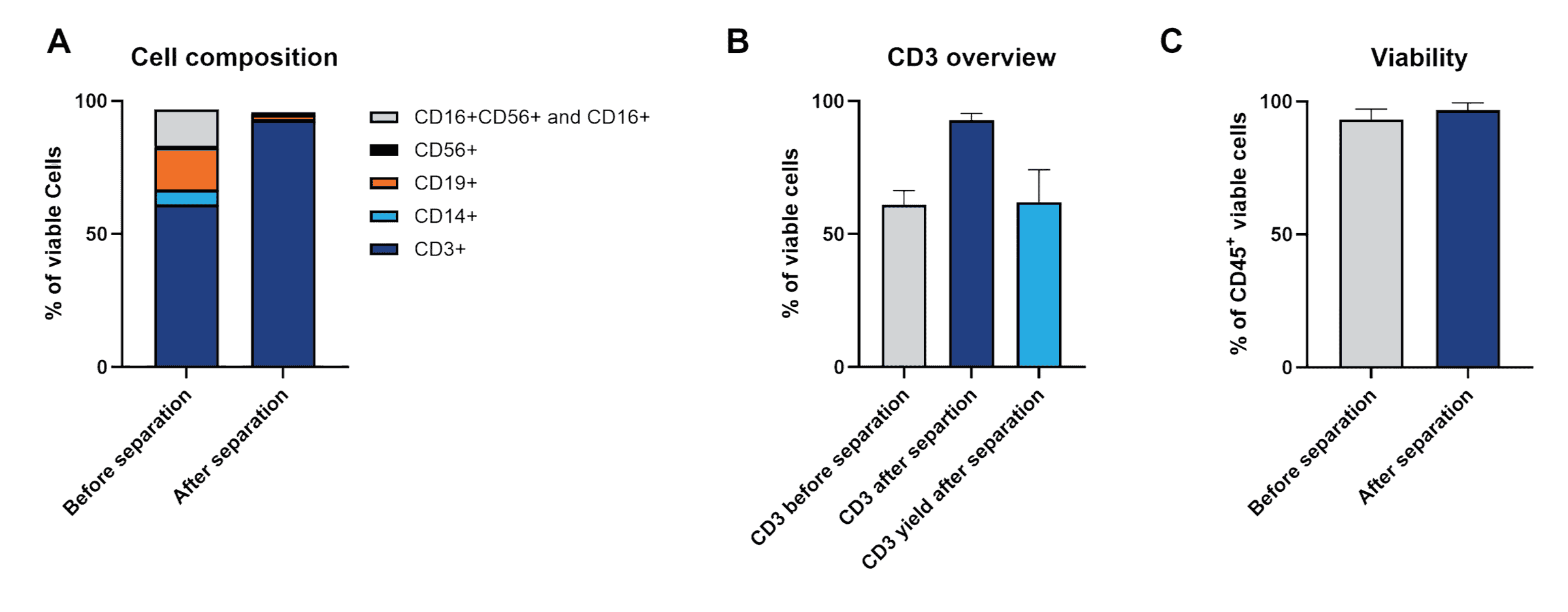 Figure 1. Cell composition and viability assessment, post-isolation.
Results from Bead-Free T-Cell Activation
Further evaluation was conducted on isolated cells to verify the activation and expansion of T-cells using bead-free technology (Atract™ T-Cell Activation kit v2). Following nine days of culture in 6M G-Rex®, viability was still high and comparable to controls (Figure 2A). In addition, by day nine, a similar fold increase in cell number was observed (Figure 2B). Activation marker expression (CD69* and CD25*) at days two and nine respectively were comparable between controls cells and cells isolated using magnet-free technology (Figures 2C, 2D).
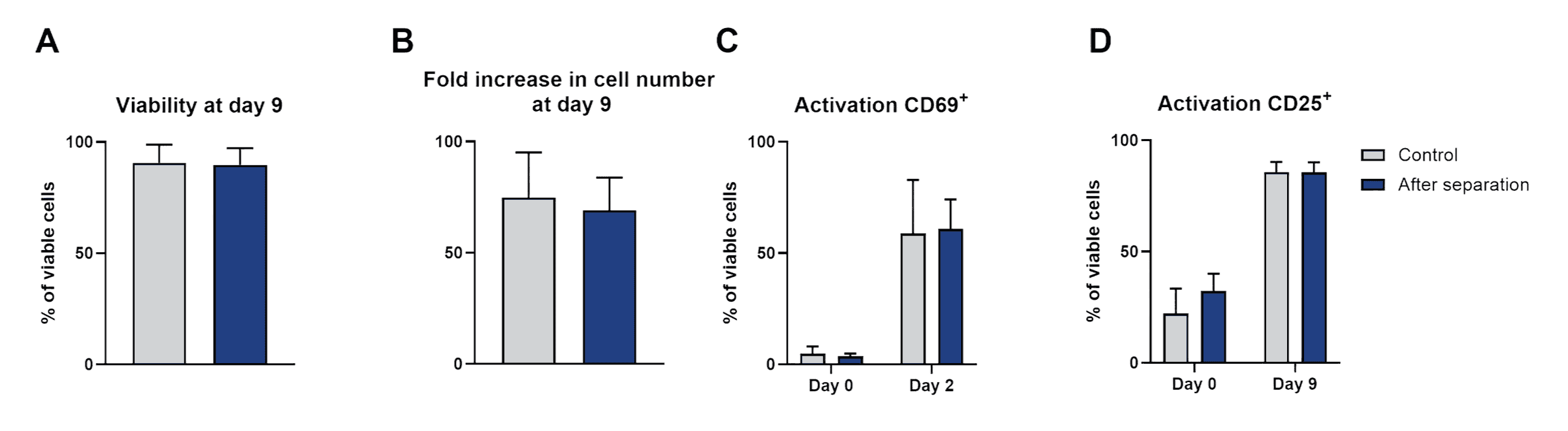 Figure 2. Viability, fold increase, and activation assessment, post-isolation.
The Cell Isolation Workflow: Worth a Closer Look
As cell therapy and immunology research push toward more precise, clinically translatable results, the tools used for cell isolation and activation must evolve to meet this new standard. Contaminants within isolated cell populations can have devastating impacts on both the usability of cells in downstream experiments and resulting data, leading to increased costs and delayed timelines. Advances in magnet-free cell isolation and activation workflows now make it possible to isolate T-cells with greater purity and phenotypic fidelity.
Explore Bio-ReCell®'s bead-free Neptune™ T-Cell Separation System and Atract™ T-Cell Activation technologies and see how this new approach can improve cell purity and preserve the cell phenotypes important to your research.